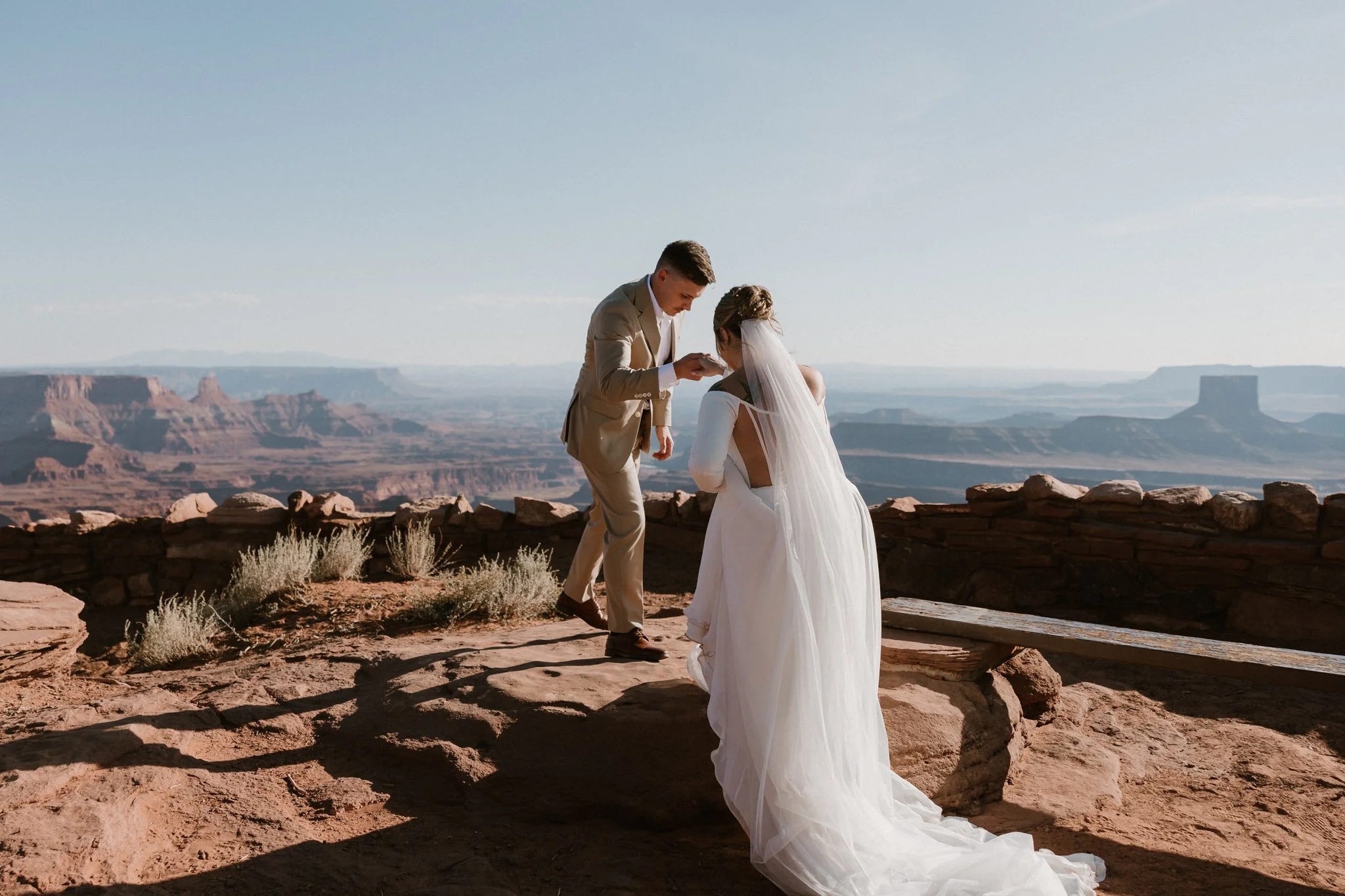
Welcome to our grounded, experience-first guide for couples who want to elope in the American West and care just as much about how it feels as how it looks. And you look damn good, so the bar is already set pretty high.
The American West isn’t a single place.
It’s a feeling, spanning states like Arizona, Colorado and California.
It’s distance. Silence. Wind. Weather. Scale.It’s choosing space over spectacle and intention over tradition.
Eloping in the American West means stepping outside the typical wedding industry playbook and designing a day that fits your style, your relationship, and your tolerance for staged bullshit. It’s about getting your boots a little dusty, watching the long sunsets and finding hidden gems amongst the red rocks.
We’ve spent over a decade helping couples elope and marry across deserts, mountains, coastlines, forests, and places many people will never know exist. We’ve planned around permits, crowds, weather systems, family dynamics, and last-minute pivots more times than we can count.
This guide is based on experience. It exists to help determine what “eloping in the American West” means to you, break down how planning really works, and help you this path is the right fit for you.
TL;DR: How to Elope in the American West
Eloping in the American West means choosing a location that fits your experience first, then building your day around light, access, and logistics.
Most couples will need to consider:
Where to elope: National parks, state parks, or BLM land (all have different rules)
Permits: Some locations require advance permits and designated ceremony sites, others are more flexible
Guest count: Impacts where you can go and how your day flows
Timing: Sunrise and sunset matter more than traditional schedules
Logistics: Travel time, weather, terrain, and backup plans all shape the experience
Vendors: Local or not, they should be prepared for the American West (like Going Home Co.)
The best elopements aren’t rushed or overly structured.
They’re intentionally planned so the day feels effortless, grounded, and actually enjoyable.
If you want a day that feels like you instead of a template, the planning matters more than the location.
What “Eloping in the American West” Actually Means
Eloping in the American West is not one defined experience. Not only does it offer a range of life-changing adventures, but every occasion is the chance to explore somewhere new, find hidden gems and make new memories. And you’re allowed to do it your way, whatever that may look like.
At its core, eloping out west usually means:
A small guest count (often just the two of you, sometimes up to 10-20 people)
A natural setting rather than a traditional venue
A day built around experience, not tradition
Prioritizing place, time, and feeling over expectation
This can look like:
Just the two of you hiking to a sunrise overlook
A weekday ceremony in a national park with 10 close people
A desert Airbnb weekend with vows at sunset
A mountaintop ceremony followed by pizza and beer
A multi-day experience instead of a single rushed timeline
Eloping doesn’t mean “small” because you couldn’t do more.
It means intentional because you didn’t want to.
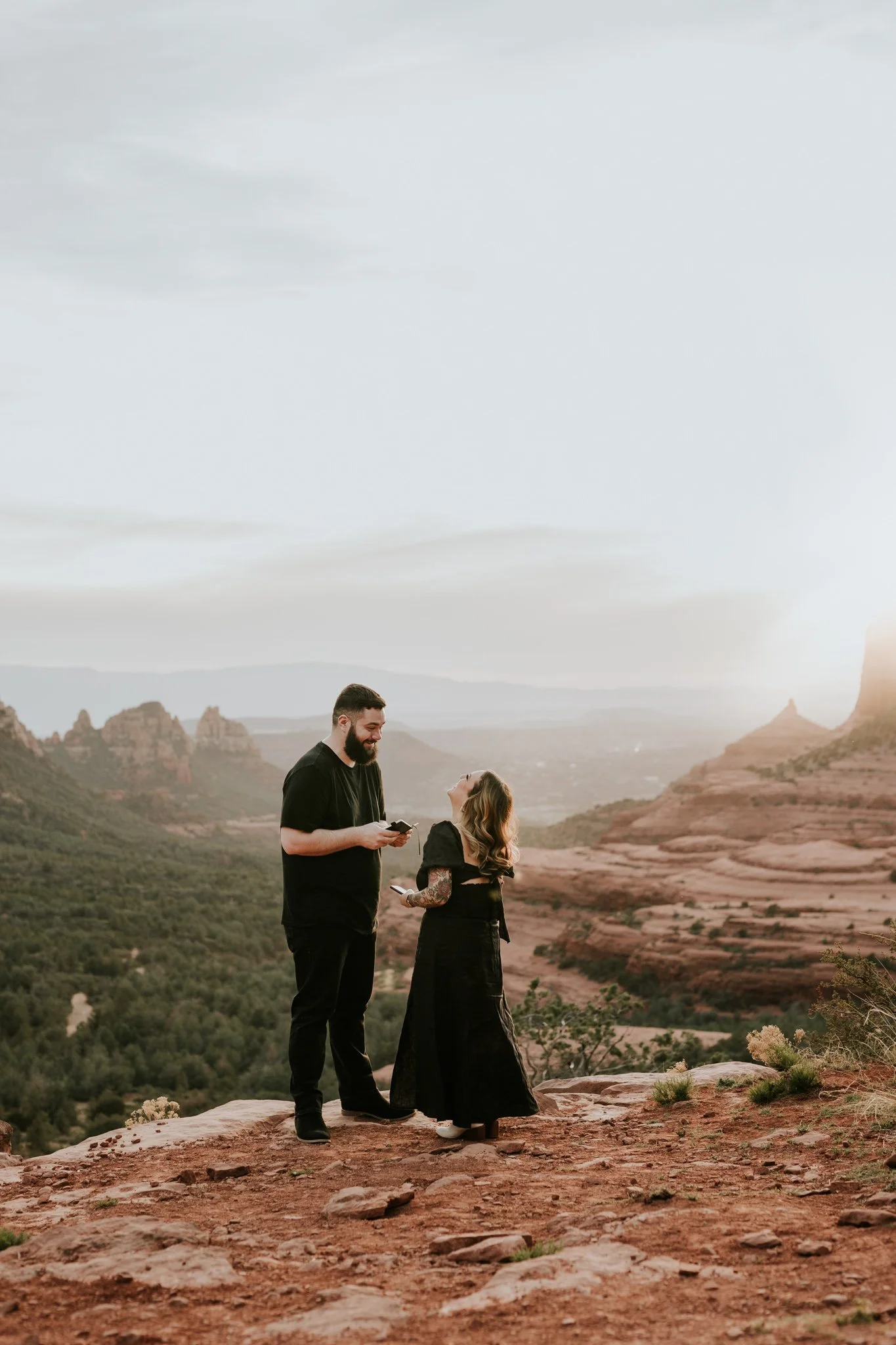
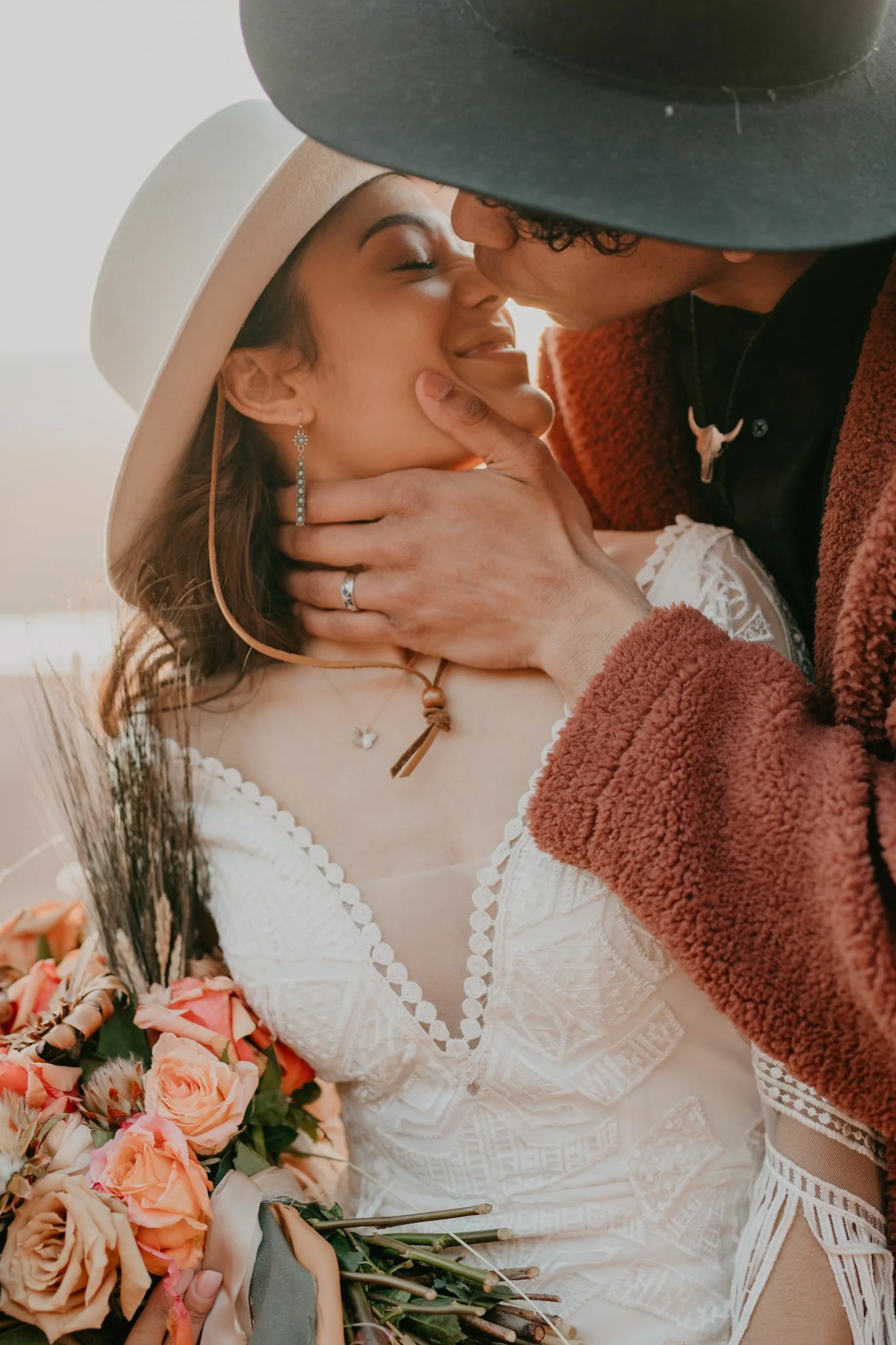
Why Couples Choose the American West
Couples don’t choose the American West because it’s trendy. If you do, you’ll be in for one hell of a surprise when the desert dirt leaves your dress a perfect sandy ombre color.
Couples choose the American West because it offers something rare.
Space
Fewer crowds, but expansive views
Less opinions, but more adventure
Less pressure to perform and more ability to breathe
Variety
Deserts, mountains, forests, coastlines, canyons
Drastically different landscapes within the same trip
Budget-friendly small towns to luxurious AirBnb’s
Freedom
Fewer rigid rules than traditional venues
More flexibility in timelines, attire, and structure
Meaning
Locations that feel grounding instead of overwhelming
Days that feel like a well-earned adventure
It’s also straight up f*%king gorgeous.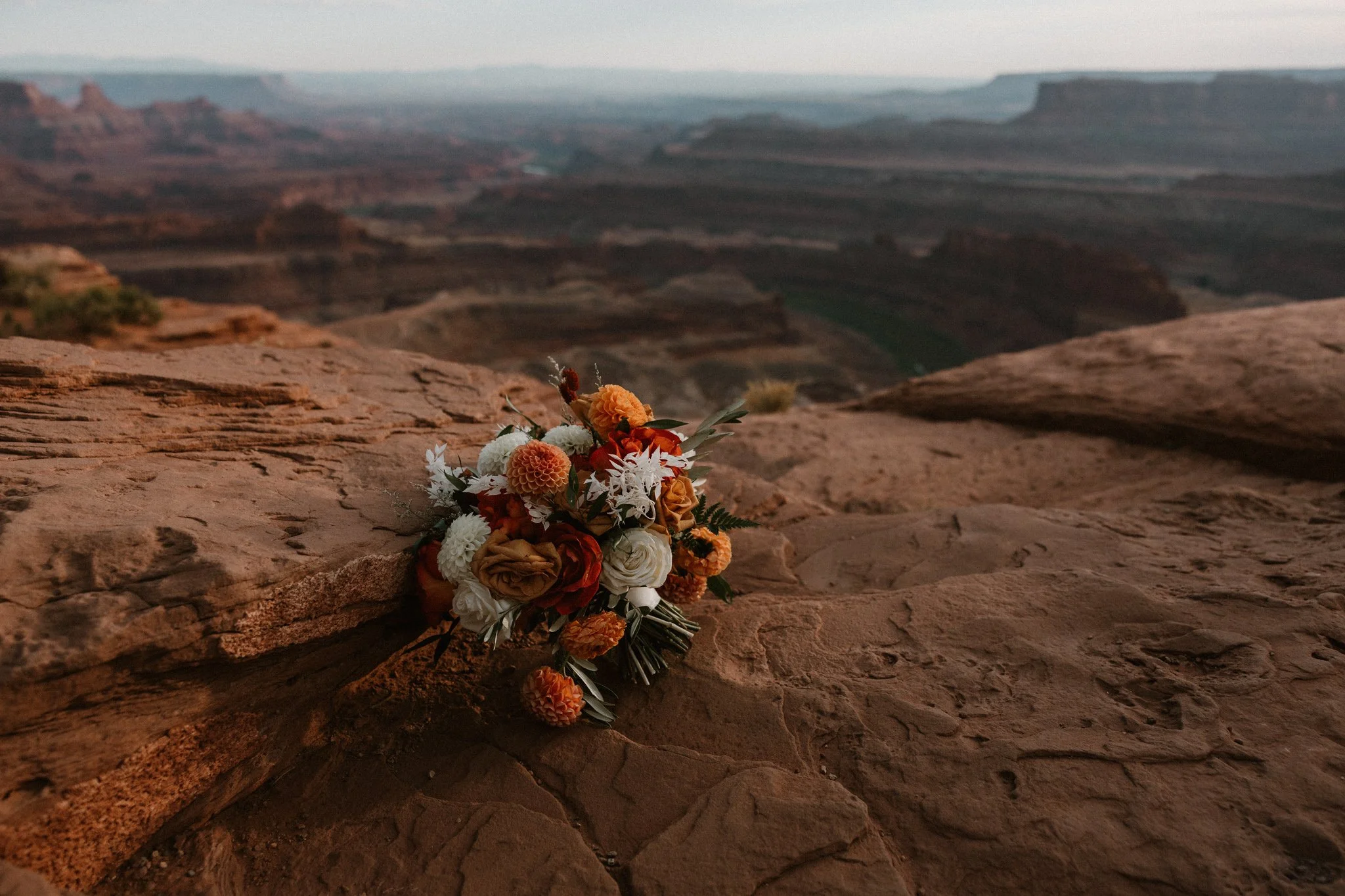
Common Myths (and Why They Cause Stress)
Myth 1: Elopements are last-minute or unplanned
Reality:
The best elopements are intentionally planned
They just remove unnecessary complexity
Unplanned = stressful
Intentional = flexible
Myth 2: You can just show up anywhere
Reality:
Many Western locations require permits
Some allow ceremonies only in specific areas
Others cap guest counts or restrict timing, decor and sound
Knowing the rules early prevents heartbreak later.
Myth 3: Eloping means excluding people
Reality:
Many couples invite a small group
Others include loved ones through shared trips or day-after experiences
Some keep it private and celebrate later
There is no moral hierarchy of guest counts. Do what feels right.
Myth 4: You need a “perfect” timeline
Reality:
Rigid timelines break quickly outdoors
Weather, light, crowds, and energy matter more than clocks
Move with the sun and plan a day that looks as good as it feels
Western elopements work best when the day can breathe. Because then you can, too.
How Planning Actually Works
This is where most blogs lie by omission.
Planning an elopement in the American West is not complicated, but it is specific.
Below is how it actually breaks down.
Locations
Most couples start with “somewhere out west” and narrow down based on:
Landscape preference (desert vs mountains vs forest)
Time of year
Guest count
Accessibility
Permit rules
You do not need to pick the most Instagrammable place for it to feel meaningful.
Often, lesser-known locations:
Have fewer restrictions
Are easier logistically
Create a calmer experience
Just as gorgeous as any popular location
Timelines
Forget traditional wedding timelines.
Elopement timelines usually revolve around:
Light (sunrise vs sunset)
Temperature
Energy levels
Travel time
Permit windows
A typical structure might include:
Slow morning together
Short hike or drive to ceremony location
Ceremony during ideal light
Exploring, celebrating, eating, resting
Optional second location or day-after session
The goal is presence, not productivity. When you remove the scripted schedule and let yourself experience freely, the day will feel more like the best adventure you’ve had amongst friends, rather than an order of expectations.
Guest Counts
Most Western locations work best with:
0–10 people comfortably
Up to 20–30 in select areas
Guest count affects:
Permit eligibility
Location options
Timeline pacing
Overall stress levels
More people = more logistics
That doesn’t make it wrong, it’s just a different experience you need to prepare for. And we’re here for every step of the planning process.
→ See: How to Plan an Elopement Without a Traditional Timeline
Permits
Permits vary wildly by location, but are always important.
Some require:
Special use permits
Ceremony location approval
Application windows months (if not a year) in advance
Others:
Don’t require permits at all
Allow ceremonies anywhere
Are handled locally and quickly
This is one of the biggest stress points for couples planning on their own. And rightfully so.
Permit rules are not static. They change. Quietly. Seasonally. When you least expect it.
Policies shift with staffing, conservation efforts, and federal legislation. A location that allowed ceremonies last year might not allow them now, or might suddenly limit guest counts, vendors, or access.
This is why we actively follow and participate in organizations like Public Land Creatives, who track legislation like the EXPLORE Act and advocate for responsible access to public lands.
Most photographers don’t keep up with this.
We do, because it directly impacts where and how you’re allowed to get married.
Your perfect day doesn’t run on iced coffee and vibes alone.→ See: National Park Wedding Permits Explained
Logistics
Logistics are where experience matters most.
Things couples often underestimate:
Travel time between locations
Seasonal road closures
Wind, heat, altitude
Bathroom access
Accessibility for guests
Backup plans
Good planning makes the day feel effortless.
Ready to soak in the desert warmth but not sure where to start? That’s literally what we’re here for.
→ Reach out hereand let’s talk through your options.
Locations That Work Well in the American West
The list is almost endless, so don’t consider these your only options.
They’re reliable starting points, each with very different personalities.
Utah desert locations
Colorado mountain locations
California national and state parks
Pacific Northwest coast + forests
Arizona high desert + canyons
Montana and Wyoming alpine regions
Each location has:
Ideal seasons
Guest count limits
Permit nuances
Crowd patterns
Choosing the right one is less about hype and more about fit.
-
These all allow ceremonies with permits. Some locations are stricter than others, but that’s where we come in.
Zion National Park (UT)
Dramatic cliffs, but ceremony locations are very restricted. Just means less chance to see another eloping couple.Capitol Reef National Park (UT)
Quiet, seriously underrated, red rock without the crowds. One of the best-kept secrets.Arches National Park (UT)
Iconic for a reason. Limited ceremony sites. Sunrise or nothing!Canyonlands National Park (UT)
Big sky energy. Less rules than Arches. Feels like standing on another planet.Great Sand Dunes National Park (CO)
Barefoot, windswept, weird in the best way. Permits are straightforward.Rocky Mountain National Park (CO)
Controlled ceremony sites only. But alpine lakes and mountains are always a classic hit.Black Canyon of the Gunnison National Park (CO)
Dark, dramatic, wildly underrated. You’d have the whole park to yourself.Glacier National Park (MT)
Unreal. Also heavily regulated. You don’t wing this one, but the views are undeniable.Grand Teton National Park (WY)
Ceremony sites are very specific, but the views are straight out of a Bob Ross painting.Joshua Tree National Park (CA)
Desert minimalism. Ceremony sites are assigned but the natural light here is unworldly.Death Valley National Park (CA)
Vast, surreal, and quiet. Winter elopements only unless you enjoy suffering. I don’t.Badlands National Park (SD)
Jagged textures, alien terrain, barely crowded. Criminally overlooked, but really cool rock formations.Theodore Roosevelt National Park (ND)
Wild horses (yes), rolling badlands, no crowds. Which is exactly why it’s worth considering.Saguaro National Park (AZ)
Giant cacti, golden light, desert breeze. Permits required but it’s very doable, and feels like two separate parks.
-
Less red tape, more flexibility, equally gorgeous views. You don’t need to be in a National Park to feel close to nature.
Dead Horse Point State Park (UT)
Canyon views without Canyonlands restrictions. Easy permit process. One of our favorites, by far.Valley of Fire State Park (NV)
Red rocks, slot canyons and vast vistas with multiple ceremony areas. One of the best locations but requires permitting knowledge.Goblin Valley State Park (UT)
Weird rock formations. Like, really weird. Feels like a sci-fi set. Surprisingly flexible.Custer State Park (SD)
Bison, granite peaks, open roads. Underrated midwestern gem.Smith Rock State Park (OR)
Jagged peaks with insane canyon views. Permits required but super manageable.Anza-Borrego Desert State Park (CA)
Massive desert playground. Wildflowers if you time it right, but views for miles. One of our favorite spots.Red Rock Canyon State Park (CA)
Dramatic desert cliffs without the Vegas crowds. And grab some concert tickets while you’re at it.
-
Most BLM (Bureau of Land Management) land allows ceremonies without permits… until one suddenly doesn’t. This is where experience matters.
Alabama Hills (CA)
Arches, Mt. Whitney backdrop, full western movie energy. Much stricter rules these days but one of the best views in California.Moab BLM Land (UT)
Outside Arches National Park and Canyonlands National Park
Same landscapes, none of the ceremony restrictions if done right. And our favorite camping sites.San Rafael Swell (UT)
Remote, rugged, and always underrated.Bonneville Salt Flats (UT)
Minimal, reflective, completely surreal. Best if you avoid the hotter months of the year.Valley of the Gods (UT)
Monument Valley vibes without Monument Valley rules. Worth seeing no matter what.Castle Valley (UT)
Towering red rock formations. Quiet, cinematic, wide open.Steens Mountain (OR)
High desert cliffs, wild horses, no one around.Beartooth Pass (MT/WY)
Chaotic alpine perfection. Technically roadside access with insane payoff.
We’re not here to tease you with unobtainable locations. We always scout ahead, adhere to park rules, and find the hidden gems most people just drive past.
But let’s not lie. We don’t share our best locations online.
Not because we’re gatekeeping, but because the best places don’t stay wild if everyone knows about them.
Wild places deserve to stay wild.What you see here is a starting point.
What you get when you book is the nitty gritty, off the beaten-path experience.
What This Looks Like in Real Life
No two elopements look the same, but here are real patterns we see often:
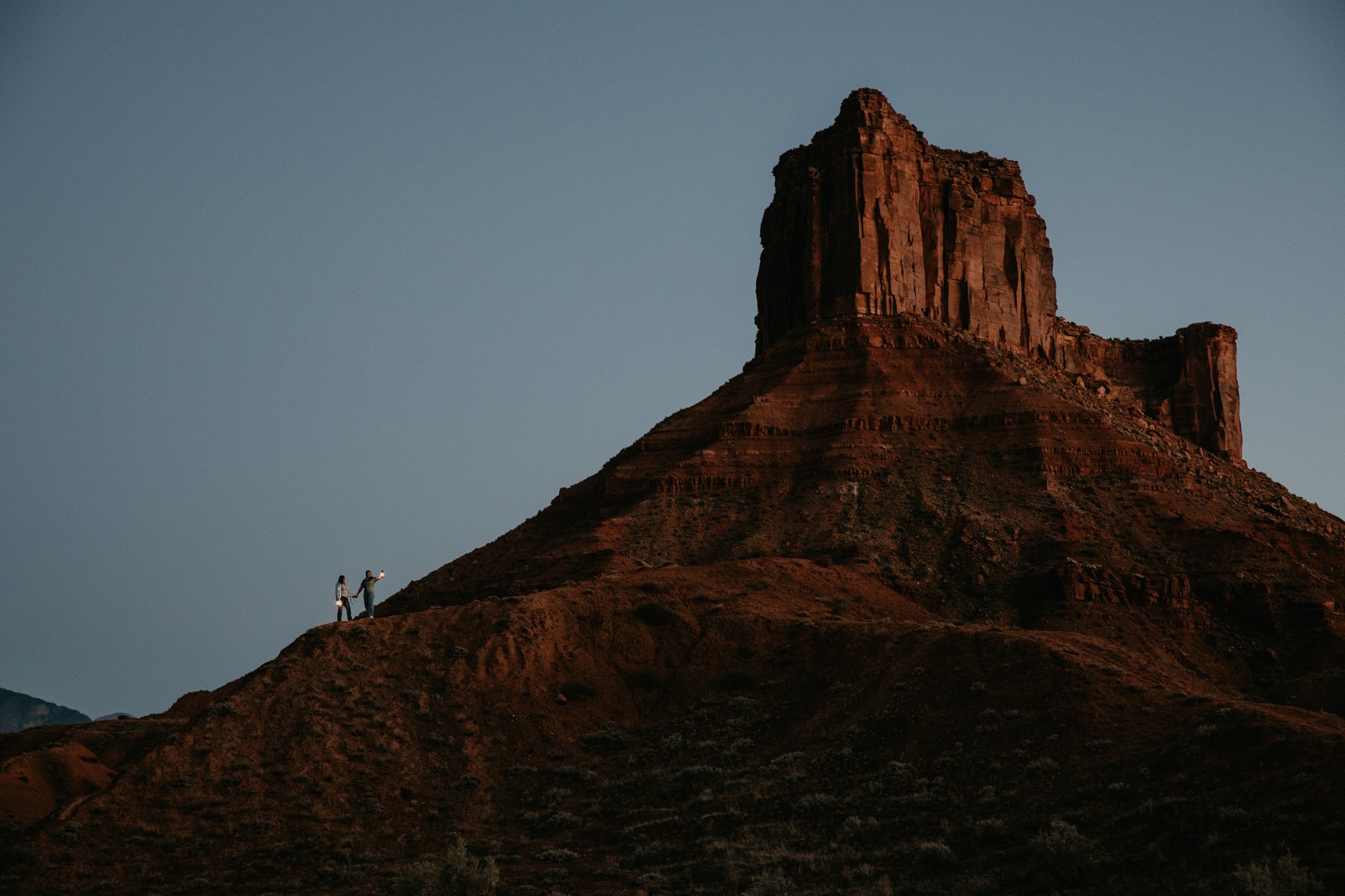
A weekday desert ceremony at sunset with 6 people, followed by tacos
A mountaintop vow exchange at sunrise, just the couple and their dog
A forest ceremony with 15 people, then a cabin dinner
A national park elopement with a second-day adventure session
A slow morning together, a sunset ceremony and a party back home
Paperwork done prior, leaving a full day to read vows and explore new places
The common thread isn’t the landscape.
It’s that the day feels unrushed, grounded, and personal.
-
Short answer: probably not.
Long answer: depends where you stand, and how you like to party (kidding.. kind of).Most places in the American West do allow ceremonies, but the rules shift depending on:
National Park vs State Park vs BLM land
Group size
Whether you have vendors
Whether your ceremony is “structured” (yes, that matters)
Some locations require permits months in advance.
Some don’t require anything at all.
Some allow ceremonies but only in very specific spots.And here’s the kicker:
These rules change more often than you’d think.So no, you’re not going rogue.
But you are stepping into a system that expects you to know what you’re doing.That’s usually where we come in and quietly make sure everything is secured without turning your day into a bunch of shitty paperwork.
-
Everything. Not in a bad way, but let’s be realistic.
Adding guests affects:
Where you’re allowed to have your ceremony
Whether you need a permit (or what type)
How far you can hike or explore
How your timeline flows
The overall energy of the day
Two people can chase light, pivot plans, and disappear into the landscape.
Ten people? Still intimate, still incredible, but now we’re coordinating wandering humans.
Twenty-five? Now we’re balancing experience with logistics.
There’s no “right” number.
But there is a point where your day shifts from free-flowing to slightly structured.The goal isn’t to limit you or your experience, but rather to design something that still feels like you, just with the right amount of preplanned chaos.
-
They won’t. And that’s kind of the point. But I get it, just typing those words cause me anxiety.
Weather shifts.
Wind picks up.
Roads close.
Sunlight does whatever it wants.The difference isn’t avoiding problems.
It’s planning properly, so none of those variables cause any lasting issues.That can look like:
Building flexible timelines instead of rigid ones
Having multiple location options ready
Understanding how different landscapes behave in different conditions
Knowing when to pivot vs when to wait it out
Some of the best moments happen when the plan loosens its grip a little.
It’s not reckless, it’s just realistic.
And when shit gets crazy, that’s usually where the story gets good.

Not sure what kind of elopement day structure fits you?
How We Support Couples Through This
We don’t just show up and take photos.
Our role often includes:
Location guidance based on season and priorities
Timeline creation that actually works outdoors
Permit education and navigation
Logistics planning and backup options
A calm, grounding presence on the day itself
You don’t need to know everything before reaching out.
So don’t be shy. Let’s start planning something undeniably you.

Ready to plan your perfect wedding in the American West? Yeah, we are too. Let’s get tacos and Facetime.
→ Explore elopement planning + photography with Going Home Co.
→ Or start with our Hell Yeah Guide if you’re still figuring things out.